1 min read
SAP Customer Stories: How CATENSYS Kept SAP Running Through a Global Carve-Out
BEYOND ESSENTIALS Core insight: A carve-out can leave a company with full ownership of its SAP systems and no team to run them. Consequence: A...
3 min read
BEYOND ESSENTIALS
Core insight: Some shop-floor problems need a tool that's missing entirely, built from scratch rather than adapted from a standard SAP fix.
Consequence: Building it locally, in the local language, closes the gap faster than importing a standard process from headquarters.
Mid-market angle: For a mid-market manufacturer, the lesson is knowing which problems need a local specialist on-site, rather than assuming every gap can be closed with a standard manual.
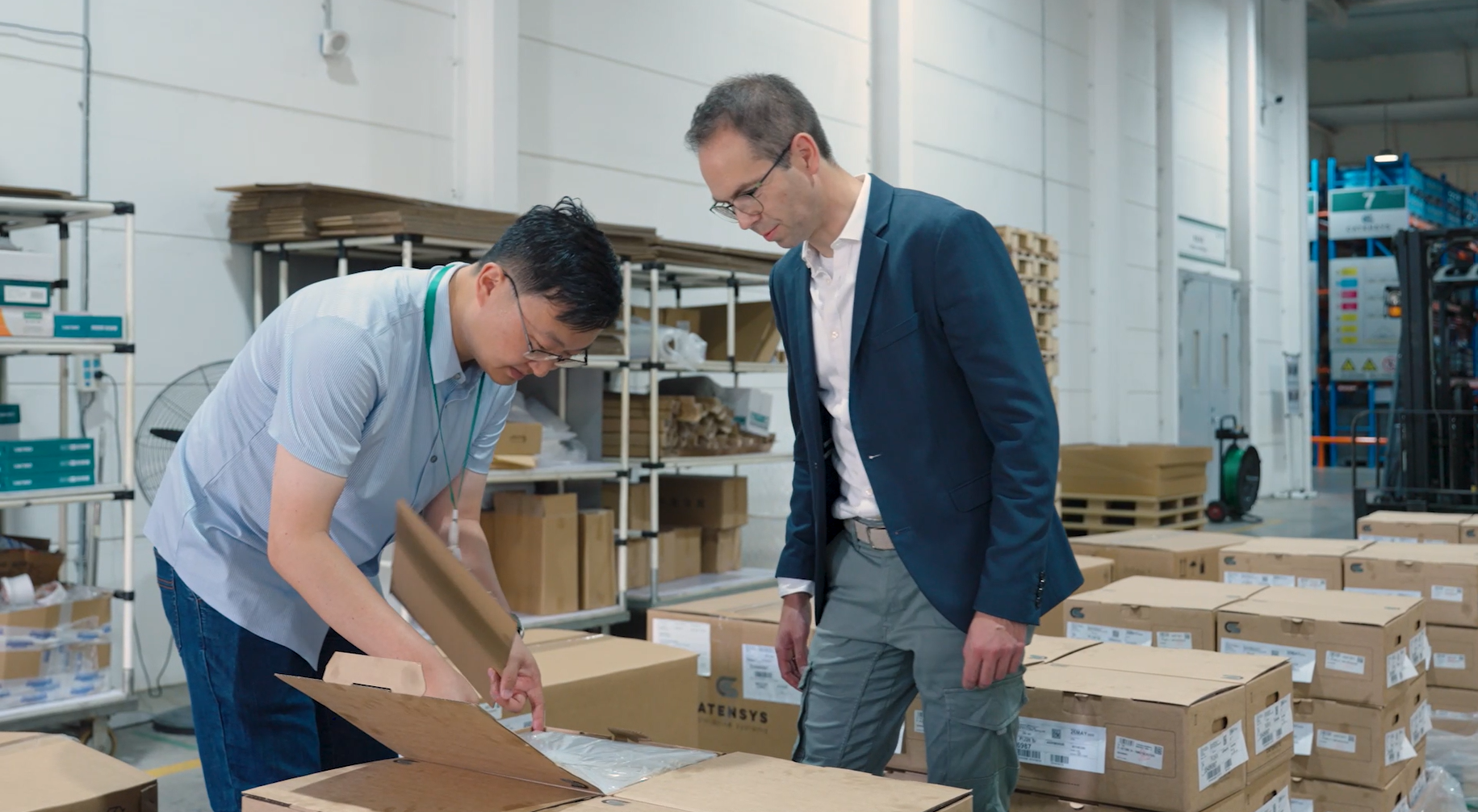
Counting stock by hand on a clipboard works fine for a small workshop moving a few pallets a day. At CATENSYS's Nanjing plant, material was moving in and out fast enough to feed production schedules across eight global sites – and it was still getting logged the same way.
At the Nanjing plant of CATENSYS, a chain-drive manufacturer with eight sites in seven countries, inbound and outbound material flows still ran on manual counts and paper-driven bookings. That kind of tracking holds up fine for a single shift, in a single language. It started breaking down the moment CATENSYS needed it to run continuously, across multiple time zones and languages.
"Through the UNITED VARS partner network, we were able, for example, to optimise logistics processes in China," says Björn Bodenstein, Global Head of IT at CATENSYS. "We used the partner QZing, who provided on-site support at the plant – for instance during training and the introduction of scanner processes."
What closed the gap was a barcode scanning workflow built for that plant's actual material flow, trained in the operators' own language, in person.

DOWNLOAD THE FULL STORY HERE →
QZing Technology, the Chinese UNITED VARS member based in Beijing, didn't bolt on an off-the-shelf scanner app. "QZing helped CATENSYS implement a barcode scanner system from scratch," says Dong Ding, Supply Chain Manager at CATENSYS. He continues describing how QZing mapped inbound and outbound flows first, then built the scanning process around them and trained shop-floor operators directly on site.
The result shows up in three places at once: fewer manual entries, faster bookings, and more accurate stock counts. None of those are dramatic on their own. Together, they mean the Nanjing plant stopped fighting its own inventory data and started trusting it.
Barcode scanning is decades-old technology. The hard part is rolling it out on a shop floor where the people who'll use it every day don't share a language or a time zone with the team that designed it.
"Since QZing, a UNITED VARS member in China, joined the project, the challenges caused by language and time zone differences have been significantly reduced," says Dong Ding. That's the part a remote consulting team, however skilled, struggles to deliver: someone who can stand on the floor, train an operator in their own language, and stay close enough to fix what doesn't work the first time.
For a mid-market company, this is the real argument for local-market depth. The barcode scanner itself is replicable anywhere. The successful rollout depended on QZing's manufacturing expertise and on-the-ground presence in China specifically – the kind of specialism a remote team can't substitute for, no matter how good the documentation is.
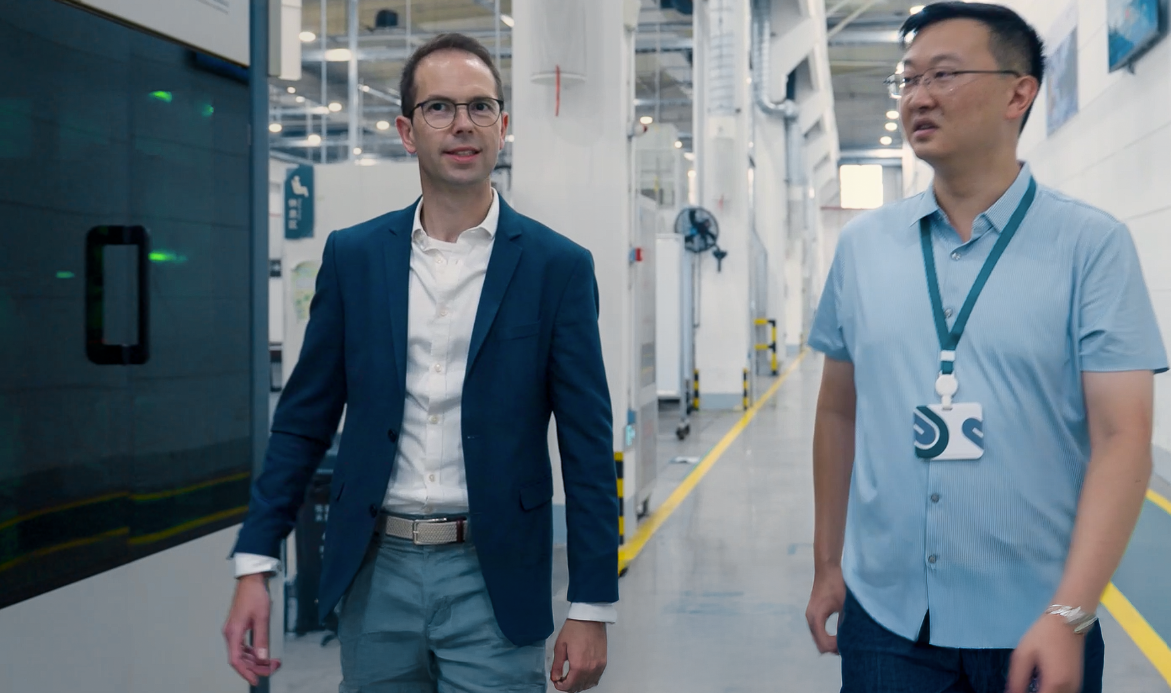
CATENSYS also tells this story on camera, walking through the carve-out, their decision in favour of the UNITED VARS alliance, and what changed for their team from day one.
Most mid-market manufacturers have at least one site where the SAP process technically works but the shop floor still does things the old way, because nobody built the bridge between the system and the floor. Usually, that bridge is a local specialist who understands both the SAP side and the operational reality, and who's close enough to train people in person rather than over a support ticket.
CATENSYS closed its China logistics gap with the right specialist on-site, someone with the language and manufacturing context to make a barcode scanner actually stick.
Mid-sized companies should go global without losing speed or local identity. UNITED VARS brings together hand-picked local market leaders with real people on the ground in 100+ countries to remove legal, cultural, and language barriers. As a strategic alliance, UNITED VARS provides clear accountability from start to finish. UNITED VARS is the world's only SAP Platinum Partner alliance, delivering end-to-end SAP services for the mid-market.
stronger than one.
1 min read
BEYOND ESSENTIALS Core insight: A carve-out can leave a company with full ownership of its SAP systems and no team to run them. Consequence: A...

1 min read
 Pascal Jobst : Aug 25, 2026, 8:30:01 AM
BEYOND ESSENTIALS Core insight: Allweiler, a German 160-year-old pump manufacturer, replaced paper delivery notes with scanner-guided SAP...
1 min read
BEYOND ESSENTIALS Core insight: Recruiting, onboarding, and retaining a full internal SAP team costs more than most mid-market budgets show on...